Cursor Automations: Always-on Agents with Triggers and Webhooks
Agentic developer tools are increasingly operated as event-driven systems. With Automations (announced in early March 2026), Cursor extends the agent model with runs triggered by schedules or events from tools such as GitHub, Slack, Linear, PagerDuty, and webhooks.
How Automations Work Technically
The core is a standardized flow from event to output:
- A trigger starts a run based on a schedule or external event
- Schedules and events can be combined in the same workflow (for example nightly + on-incident)
- The agent executes inside an isolated cloud sandbox
- Tool and system access is mediated through configured MCPs (Model Context Protocols)
- Results are published as a pull request, comment, ticket update, or report
- Optional state via memory/context so recurring runs remain consistent
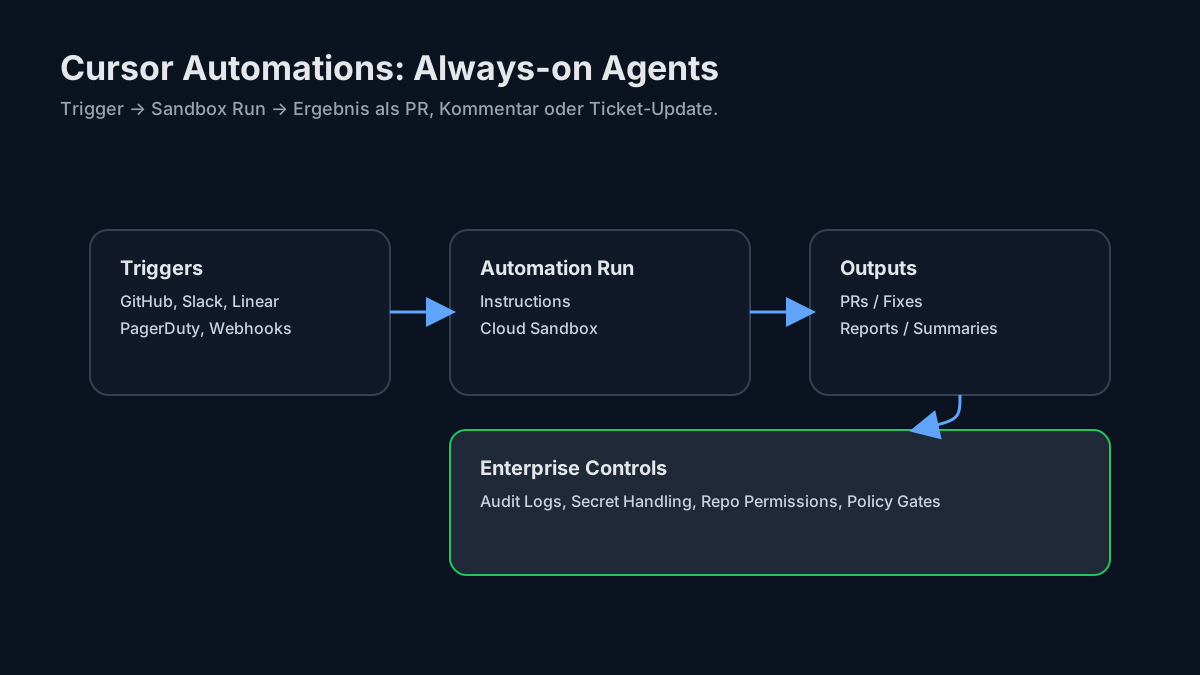
Enterprise Control Points
For trigger-driven agents, three control areas become central:
- Permissions: least-privilege access to repos, issues, and deployments
- Secrets: separation of runtime secrets from LLM inputs, rotation and scoping
- Traceability: audit logs for prompts, tool calls, and diffs
- Quality gates: reviews, tests, and policy checks before merge/release
- Data handling: retention, data residency requirements, and access to internal artifacts
- Model routing: selecting models per automation and central policy for tool calls
A neutral run contract can capture technical boundaries as a data model:
{
  "automation": "nightly-security-scan",
  "allowedPaths": ["src/", "infra/"],
  "maxDiffLines": 600,
  "requiresReview": true,
  "outputs": ["pull_request", "report"],
  "secretsPolicy": "no-secrets-in-prompts"
}
Such contracts matter especially when automations are integrated into change-management processes and outputs must remain reproducible and auditable.
Why This Matters
Always-on agents move AI assistance from interactive IDE sessions into operational workflows. That shift makes access control, auditability, and reproducible quality gates core requirements for production use.