
DSSC Blueprint v3.0: Reference for Data Spaces and a New Maturity Assessment
Building data spaces rarely fails because of a single technology. The blocker is usually a lack of comparability: concepts, roles, trust assumptions, and technical building blocks are named and evaluated differently across initiatives. With DSSC Blueprint v3.0 (February 2026), reference elements were updated and complemented by a maturity assessment that classifies initiatives against defined criteria.
What the Blueprint Covers
The blueprint provides a consistent structure that projects can use as shared vocabulary:
- Business: use cases, roles, benefits, and value streams
- Governance: policies, contracts, onboarding, and compliance
- Trust: identity, credential profiles, conformity, and enforcement
- Technology: connectors, semantics, interfaces, operations, and security
- A focus on interoperability so different implementations follow compatible flows
- Guidance for operating models (for example platform operations, federation, participant onboarding)
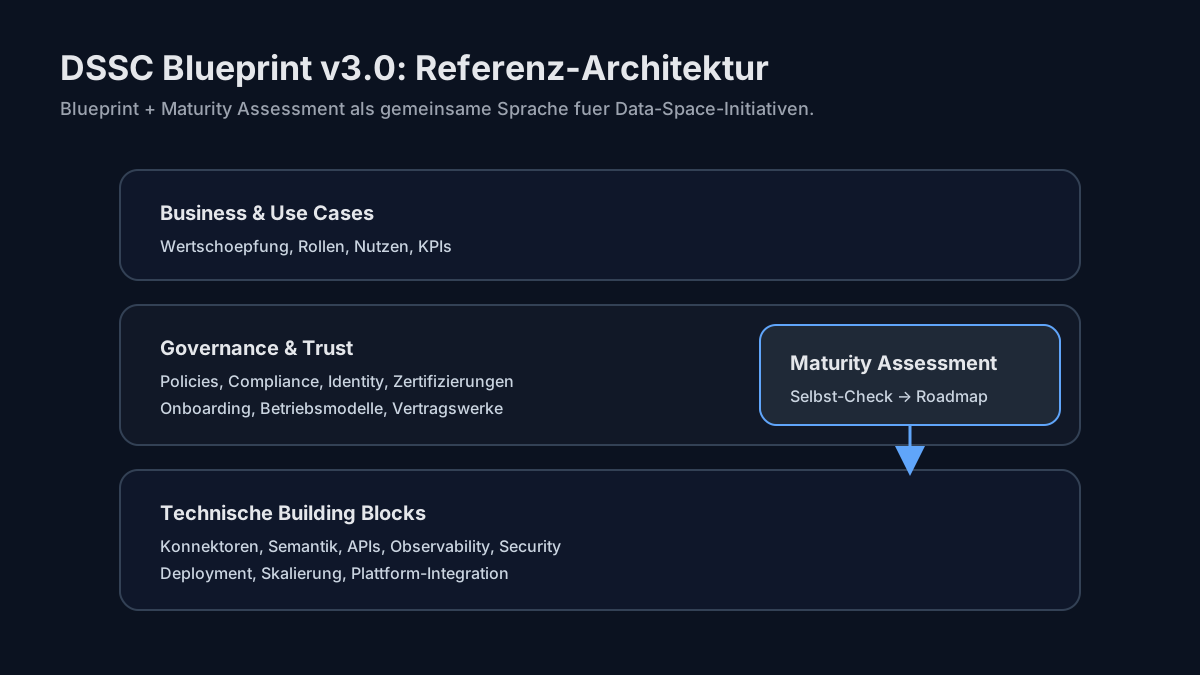
Maturity Assessment: From Status to Roadmap
The assessment connects architecture blueprints with operationalization:
- A criteria set for capabilities (for example interoperability, governance, operations)
- Classification into maturity levels and identification of gaps
- Self-assessment as a standardized entry point across different starting positions
- Comparability across initiatives to steer roadmaps and investment priorities with data
Across many ecosystems, trust capabilities tend to lag behind technical connectivity in early phases. The assessment makes such asymmetries visible.
A schematic result can be documented as a data model:
{
  "initiative": "example-dataspace",
  "dimensions": {
    "governance": "defined",
    "trust": "emerging",
    "technical": "operational"
  },
  "nextSteps": ["credential-profile", "policy-enforcement", "interop-testing"]
}
Why This Matters
Data space initiatives are ecosystem-driven: interoperability only emerges if multiple participants build and operate against compatible rules. A shared blueprint plus maturity assessment improves comparability, reduces fragmentation, and accelerates alignment between governance and technology.