
Java 26 Is Available: HTTP/3, AOT Object Caching, and Security Updates
Java 26 became available in March 2026 as the next feature release in the six-month cadence. The release bundles changes across language features (partly preview), libraries, performance, and security, making it a relevant upgrade point for cloud-native Java stacks.
Key Changes in Java 26
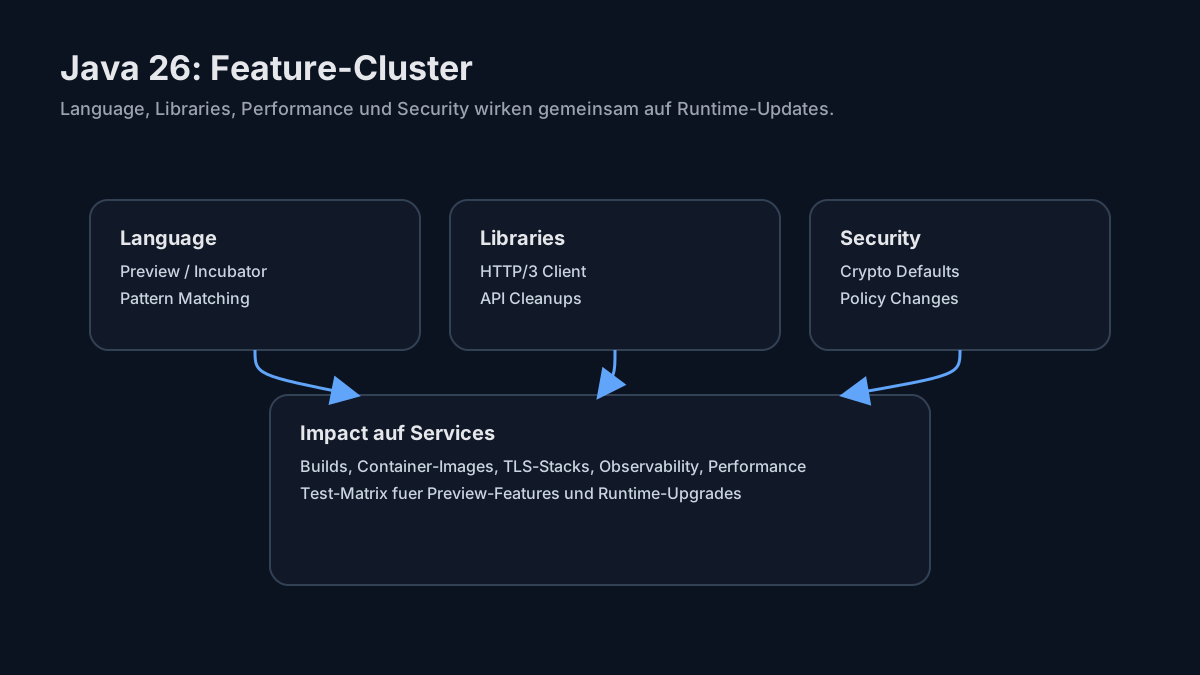
Several clusters have direct impact on runtime and build environments:
- Language evolution through preview/incubator features and continued JEP progression
- Preview features typically require explicit enablement and affect test and rollout policies
- Library updates such as HTTP/3 support in
HttpClient(depending on implementation maturity) - Performance work like ahead-of-time object caching to reduce startup costs
- Maintenance and cleanup, including removal of legacy APIs (for example the Applet API)
- Preparatory work around stricter
finalsemantics (for example Prepare to Make Final Mean Final) - Security changes that affect defaults, TLS stacks, and cryptography behavior
Relevance for Cloud-Native Java Stacks
In production environments, Java releases are often more of a platform upgrade than a code change:
- Updating base images and runtime layers in container registries
- Aligning toolchains in Maven/Gradle (compiler, jlink, native-image)
- Maintaining test matrices for frameworks and agents (observability, security, profiling)
- Treating deprecations and removals as inputs for modernization roadmaps
- Choosing between a feature release upgrade and an LTS track based on platform strategy
A practical entry point is pinning the toolchain in Gradle:
// build.gradle.kts
kotlin {
  jvmToolchain(26)
}

tasks.withType<Test> {
  useJUnitPlatform()
}
Why This Matters
The six-month Java cadence shortens the distance between major runtime shifts. Teams that continuously maintain toolchain upgrades, container images, and dependencies reduce migration risk and stay ready to adopt security and performance improvements from new releases.