
Kotlin 2.3.20: Tooling Release Focused on Compiler and Build Stability
For Kotlin teams, tooling releases often matter more than single language features because they directly affect build times, IDE integration, and release pipelines. In mid-March 2026, Kotlin 2.3.20 shipped as an update focused on compiler and standard-library fixes.
What the Release Includes
The release targets areas that become visible in CI and local builds:
- Performance optimization: redundant initialization is avoided in the IR pipeline
- Stability fix: a race condition in the standard library’s
Duration.parseis fixed - Tooling focus: changes that primarily impact build and IDE workflows
- Reduced build variance when multiple modules compile and cache in parallel
Especially in multi-module projects, such fixes directly affect incremental compilation and CI repeatability.
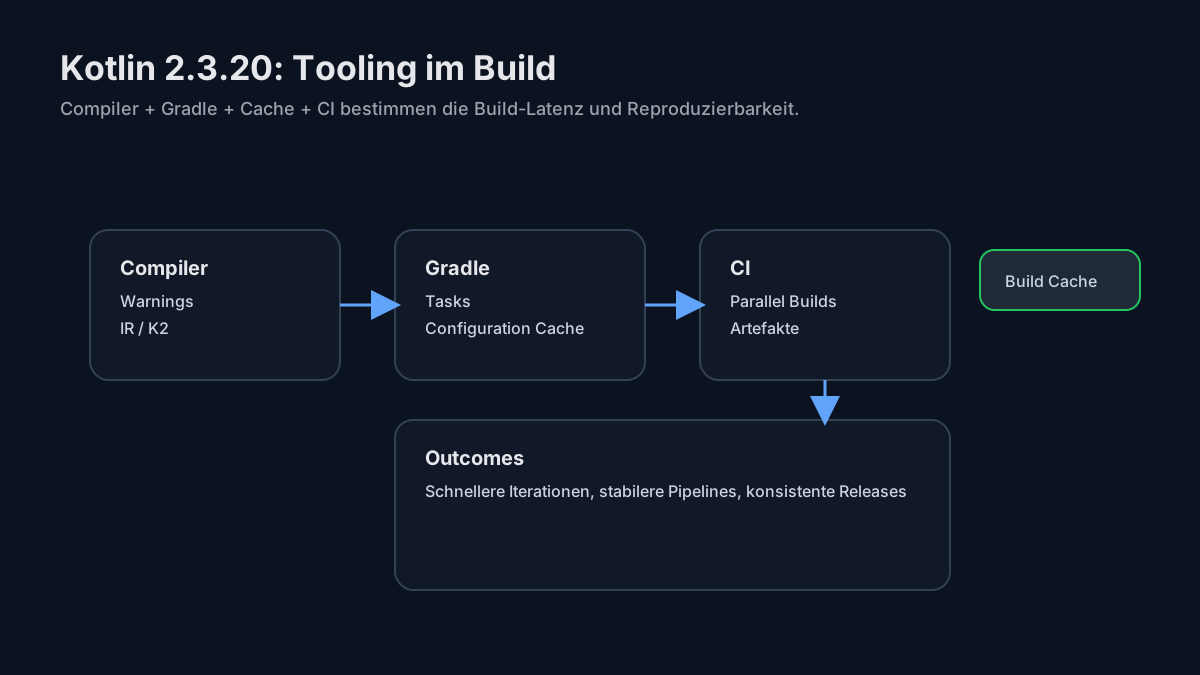
Upgrading Gradle and CI
In practice, a Kotlin upgrade touches multiple integration points:
- Updating the Kotlin Gradle plugin (and potentially Kotlin DSL in
build.gradle.kts) - Keeping local toolchains aligned with CI images
- Reviewing compiler flags, especially when warnings are used as quality gates
- Checking build plugins (for example KSP, Dokka, static analysis) for Kotlin-version compatibility
- Validating Gradle features such as configuration cache and daemon settings for stability
Example of centralized version pinning:
// build.gradle.kts
plugins {
  kotlin("jvm") version "2.3.20"
}

tasks.withType<org.jetbrains.kotlin.gradle.tasks.KotlinCompile> {
  compilerOptions.freeCompilerArgs.add("-Xjsr305=strict")
}
Why This Matters
In larger Kotlin codebases, build latency and reproducibility determine CI/CD throughput. Tooling releases like 2.3.20 directly improve pipeline stability, reduce rebuild cost, and lower flakiness from edge-case runtime and stdlib behavior.