
Kubernetes: Out-of-Band Patch Releases for Go CVEs
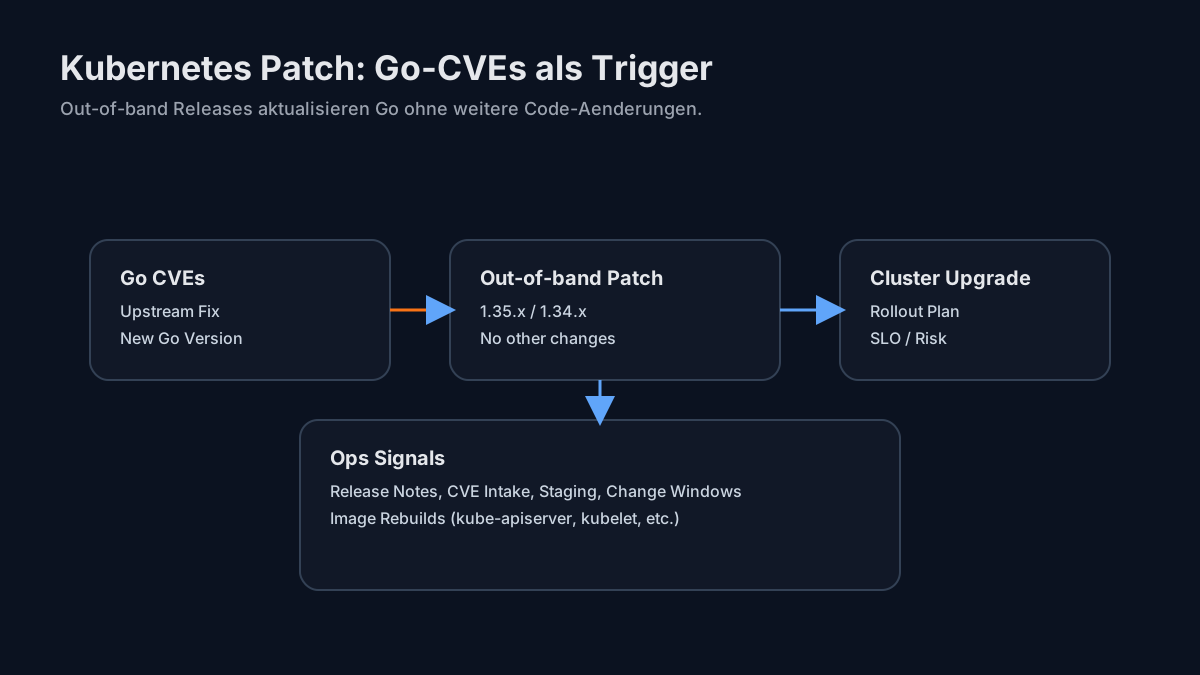
Kubernetes patch releases usually follow a monthly cadence. In late February 2026, multiple branches shipped out of band to pick up a new Go version and address several Go CVEs. The patch-release notes explicitly state: no other changes.
What “Out of Band” Means in Practice
An out-of-band patch has different operational characteristics than a regular monthly patch:
- Release timing outside the patch calendar, triggered by security intake
- The change is primarily a toolchain update (Go) rather than feature fixes
- Rebuilt binaries and images for components such as kube-apiserver and kubelet
- Coordinated patches across multiple minor lines (for example
1.35.x,1.34.x,1.33.x) - Patches can be required even if workloads are unchanged - the dependency is the Go runtime
- Managed offerings typically absorb such releases into their own rollout schedules and maintenance windows
Practical Impact on Upgrade Processes
For platform teams, this creates clear process requirements:
- Tracking the official patch-release history and security announcements
- Maintaining a staging cluster for fast validation under tight timelines
- Aligning change windows for clusters under security SLAs
- Rebuilding internal components if Kubernetes is run from source builds
- Accounting for version skew (control plane vs nodes) during rollout
- Upgrading nodes in waves (for example by node pools) with PDBs and capacity planning
For self-managed clusters, rebuilding internal images and artifacts is often part of the upgrade whenever Kubernetes is derived from source or vendor builds.
A minimal upgrade path with kubeadm typically looks like this:
kubectl version --short
kubeadm upgrade plan

# Example: upgrade to a specific patch release
sudo kubeadm upgrade apply v1.35.2
kubectl get nodes -o wide
Why This Matters
Security fixes are not always aligned with the monthly patch schedule. Out-of-band releases require the ability to upgrade with short lead times, clear communication toward application teams, and an operationalized pipeline for validation and rollout.