
Open VSX: 300 Million Downloads and New Supply-Chain Protections
Extension registries have shifted from background services to critical infrastructure. In early March 2026, the Open VSX Registry reported more than 300 million downloads per month, peak traffic above 50 million requests per day, and an ecosystem with thousands of publishers and tens of thousands of extensions.
What Changes in Registry Operations
At this scale, registry capabilities resemble practices from mature package ecosystems:
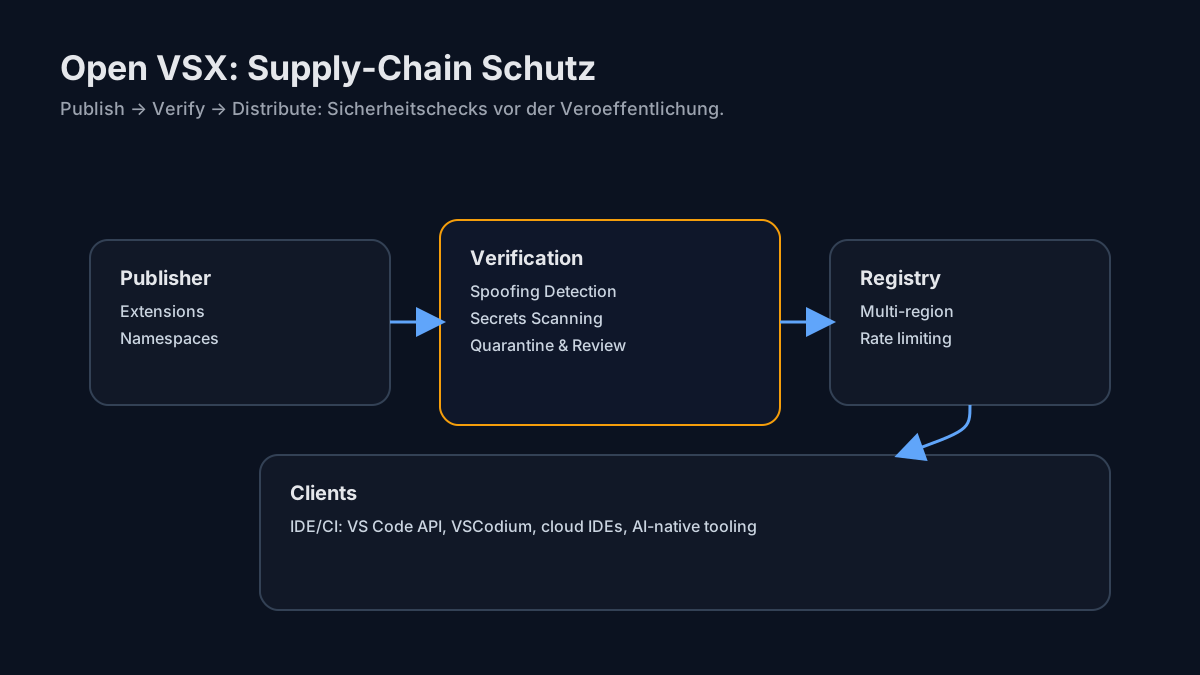
- Pre-publication verification to detect namespace impersonation, spoofing, and suspicious uploads
- Checks for exposed credentials and recurring malicious patterns
- Quarantine & review for flagged packages before publication
- Responsible rate limiting and traffic management for automated spikes
- A move toward hybrid multi-region architecture with encrypted data and backups
Implications for CI/CD and Enterprise Governance
When IDE extensions become part of production development workflows, standard supply-chain controls apply:
- Allowlists for publishers and extension IDs
- Mirroring into internal registries for reproducible builds
- Signatures, SBOMs, and malware scanning as gates before rollout
- Audit logs for installs and automated updates
A common pattern is a CI stage that validates a .vsix artifact before it is promoted:
name: extension-verify
on: [workflow_dispatch]
jobs:
  verify:
    runs-on: ubuntu-latest
    steps:
      - name: Scan VSIX archive
        run: |
          unzip -l extension.vsix | head -n 50
          gitleaks detect --no-git --source .
          trivy fs --severity HIGH,CRITICAL .
Why This Matters
With the rise of cloud IDEs and agentic development workflows, extension distribution becomes a central attack and failure domain. Combining publication-time checks, scalable infrastructure, and operational security processes reduces risk while keeping the ecosystem vendor-neutral and open.