
Tractus-X and EDWG: Partnership for Protocols, Conformance, and ISO Standardization
Dataspaces depend on interoperability: participants must exchange data without implementing proprietary one-offs. In February 2026, at the Dataspace Symposium, closer collaboration between Eclipse Tractus-X and the Eclipse Dataspace Working Group (EDWG) was communicated to better align protocols, conformance evidence, and standardization work.
Division of Responsibilities Between Working Group and Project
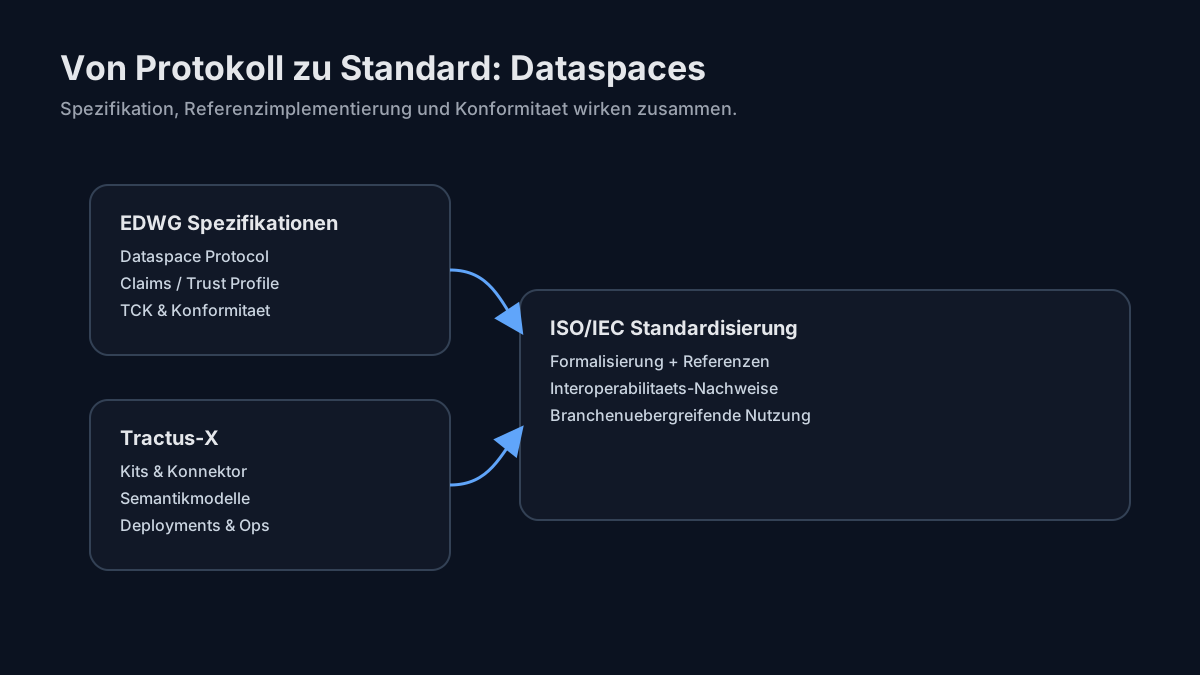
The partnership can be understood as interplay between specification and implementation:
- EDWG: development and maintenance of protocols (for example the Dataspace Protocol) and profiles
- EDWG: focus on standards and conformance (TCKs, claims/trust profiles, interoperability approaches)
- EDWG: definition of credential profiles and claims flows as trust building blocks for participants
- Tractus-X: open source reference implementations, including kits, connector distributions, and deployment artifacts
- Tractus-X: semantic and use-case oriented building blocks for Catena-X rollouts
- Tractus-X: feedback loops from operations and integration projects into specification work (issues, change requests)
What Conformance Means in Dataspaces
Conformance is multi-dimensional and typically introduced in phases:
- Protocol conformance: correct implementation of API flows and versions
- Identity and claims: standardized credentials and verifiable identities
- Policy enforcement: traceable evaluation of usage rules on the connector side
- Interoperability testing: repeatable tests across implementations and releases
- Conformance statements: documented versions, profiles, and supported features per participant/connector
- Semantic conformance: data contracts and model versions as prerequisites for use-case interoperability
In a standardization context, conformance becomes especially important because ISO/IEC standards typically require not only a specification, but also clear evidence that implementations can be tested and validated.
A common entry point is automating conformance testing in CI:
./gradlew test
./gradlew :tck:verify -PprotocolVersion=latest
./gradlew :interop:report
Why This Matters
When protocols are standardized and operationalized through reference implementations, ecosystem fragmentation decreases. This increases the likelihood that dataspaces become cross-industry compatible and that participants can run implementations aligned to the same trust and interoperability rules.
Additional conformance artifacts such as TCK reports and conformance statements also simplify procurement and reduce interpretational gaps between partners.