
Kotlin Multiplatform: Stable for All Platforms
JetBrains officially declared Kotlin Multiplatform (KMP) stable for production use in late 2023. Since then, the ecosystem has expanded rapidly: Google announced official KMP support in May 2024, and developer adoption more than doubled from 7% in 2024 to 18% in 2025, according to Developer Ecosystem surveys.
What Is Kotlin Multiplatform?
Kotlin Multiplatform enables sharing business logic across multiple platforms without sacrificing access to platform-specific features. Key characteristics:
- Shared code for Android, iOS, web, and server within a single Kotlin project
- Platform-specific implementations via the
expect/actualmechanism - Full interoperability with existing native APIs and frameworks
- Compose Multiplatform for cross-platform UI, officially stable for iOS since version 1.8.0
Companies such as Shopify, Forbes, and Zuercher Kantonalbank already use KMP in production. Over 50,000 organizations utilize the framework worldwide.
Architecture and Use Cases
KMP architecture is built around a common module containing platform-independent code, and platform-specific modules for Android, iOS, or other targets. The expect/actual pattern resolves platform differences at the language level:
// commonMain
expect class PlatformInfo() {
    val name: String
    val version: String
}

// androidMain
actual class PlatformInfo actual constructor() {
    actual val name: String = "Android"
    actual val version: String = Build.VERSION.RELEASE
}

// iosMain
actual class PlatformInfo actual constructor() {
    actual val name: String = "iOS"
    actual val version: String = UIDevice.currentDevice.systemVersion
}
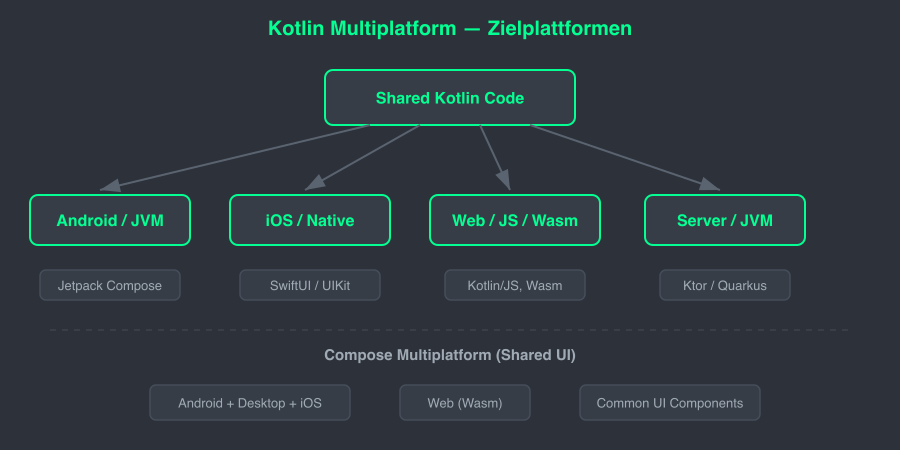
Typical use cases include sharing networking layers, data models, and business logic. Google has already released Jetpack libraries such as Room, DataStore, and ViewModel with KMP support.
Why This Matters
With stable backing from both JetBrains and Google, Kotlin Multiplatform has reached a critical level of maturity. Teams can now build cross-platform projects with a single technology stack without compromising native performance or platform-specific capabilities. Eliminating redundant codebases reduces maintenance overhead and significantly accelerates time-to-market for new features.